From raw material to a module ready for the vessel, every phase of production at Albizzati Group is performed with our own equipment and our own people, across five production sites in Italy. This is what happens in each of the six phases, and why keeping them together matters.
Why one cycle instead of six suppliers
Each handover between companies is a point where information is lost, responsibility blurs and time is spent on alignment. By managing the complete production cycle internally we ensure maximum quality control, flexibility and reliability: every step, from engineering to final testing, is performed with our own equipment and skilled workforce, in 46,000 m² of covered facilities with more than 830,000 hours worked each year.
1. Engineering and design
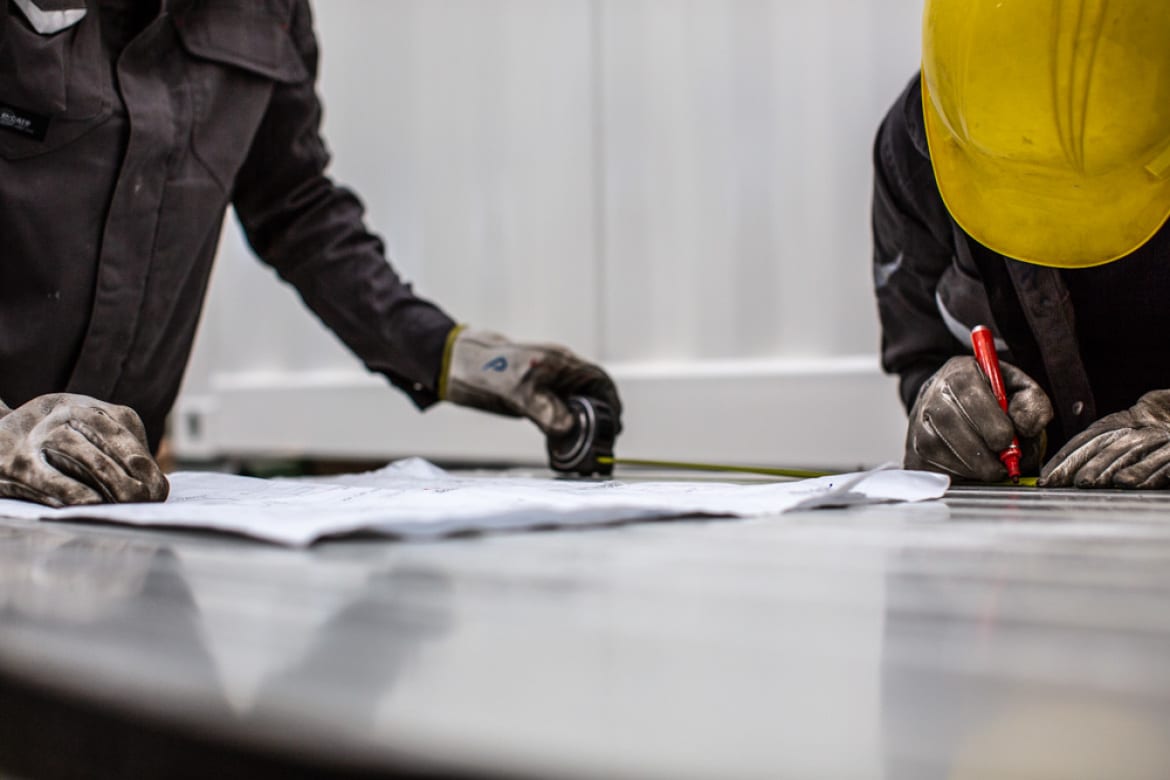
Mechanical, structural, electrical and HVAC design is developed in-house by Albizzati International Project, with full 3D modelling, FEM, fatigue, blast, thermal and acoustic analysis and CFD simulations. The technical offices in Magenta coordinate directly with the client’s engineering team, as on the LNG Canada Field Auxiliary Rooms, and the production drawings are issued for approval before the first plate is cut.
2. Fabrication and machining
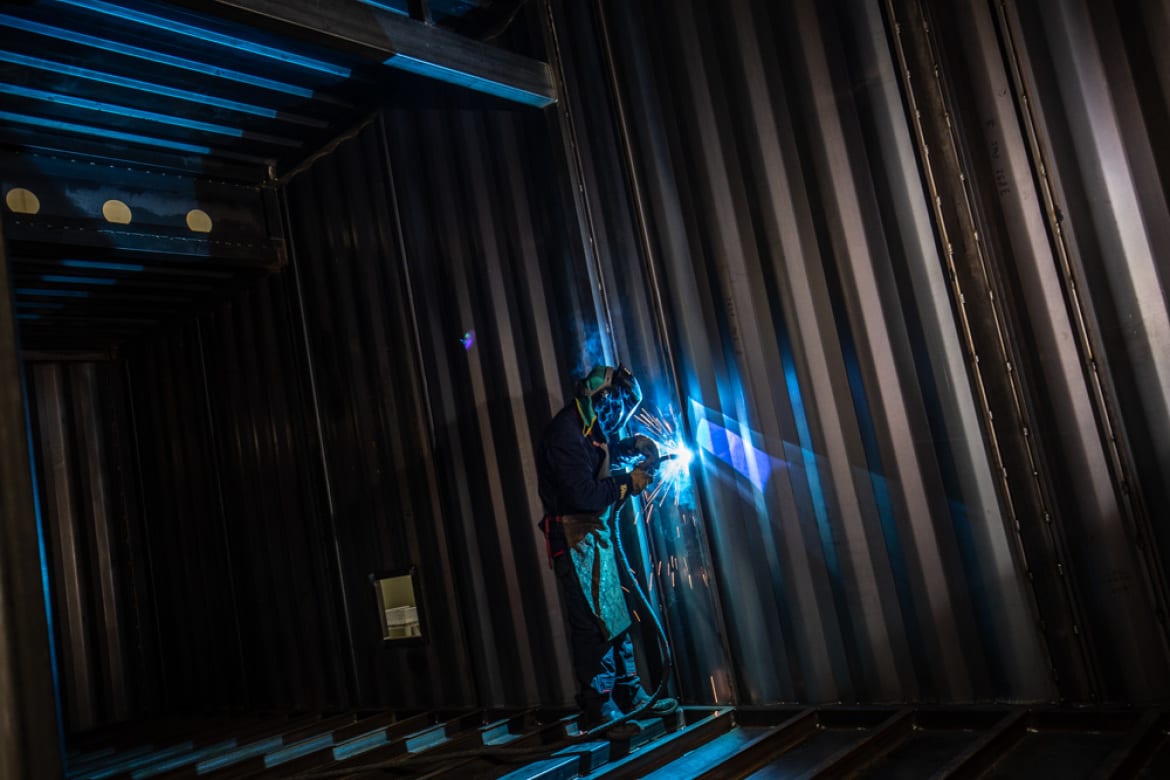
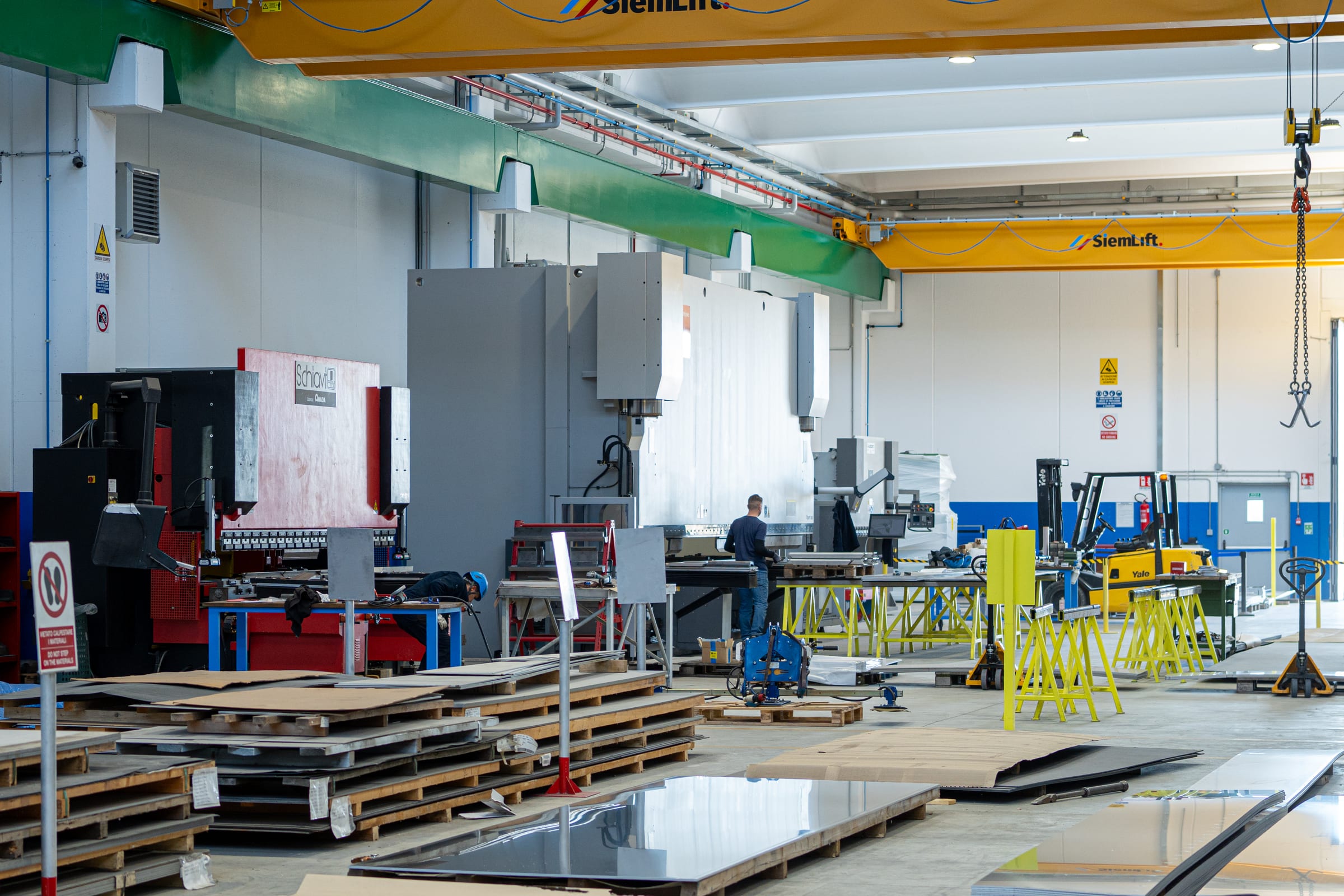
Cutting, welding, bending, CNC machining and heavy modular assembly are performed on our own machinery: two Trumpf laser cutting machines of 4 × 2 m and a Bystronic of 12 × 2.5 m; an ESAB plasma cutting machine of 12 × 3 m; seven press brakes from 350 to 800 tonnes and up to 9 m; shears, an Amada punching machine with 50 tools, a 12 m five-axis machining centre for profiles, three four-roll bending machines up to 32 mm thickness and five band saws. Welding is carried out under ISO 3834-2:2021, EN 1090 up to execution class EXC3 and CSA W47.1, with the ASME U-Stamp for pressure vessels.
3. Surface treatments and painting
Sandblasting, painting, coating, insulation, pickling and passivation are performed to project specifications in five sandblasting and painting rooms from 10 × 27 m to 17 × 45 m and three pickling and passivation rooms from 8 × 15 m to 17 × 27 m. The new department in Magenta, operational since 2025, manages dust, aerosol and fume extraction and controlled drying under Industry 4.0 monitoring. Surface treatments are among the most critical phases for lead time and execution quality, which is exactly why we keep them in-house.
4. Integration and cabling
This is where a steel box becomes an engineered system. Our electrical teams interconnect and cable MV/LV cabinets, MCC, UPS and batteries, DCS/ICSS, fibre optic cabinets, transformers and control consoles, and integrate HVAC, fire and gas, telecommunication (PAGA, VHF radio, CCTV) and auxiliary systems. Tubing and sample lines are executed in dedicated areas with precision and cleanliness; semiconductor equipment is assembled in an ISO 8 clean room of 20 × 40 m, where more than 60 units can be assembled simultaneously.
5. Testing and quality control
Every unit is tested in-house before it leaves: dimensional tests; painting and coating tests; electrical tests for continuity, rigidity, earthing and insulation; functional tests of the installed equipment; rain test; load and drop tests; pressure and leak tests; weld inspection by PT, MT and UT; thermal test from −35 °C to +70 °C. PCM passive shelters add a four-day climatic chamber cycle, heat exchangers add hydrostatic and pneumatic tests with third-party inspection. The phase closes with the factory acceptance test, witnessed by the client. See our quality and certifications page.
6. Packing and shipment
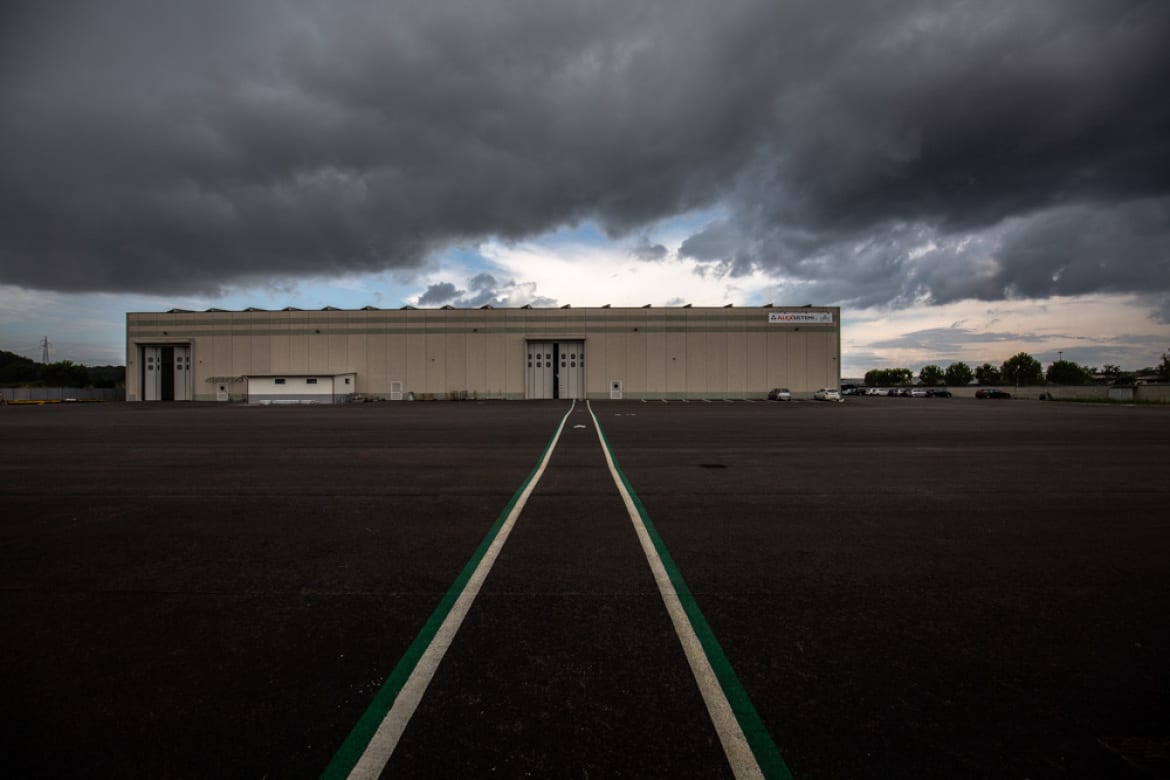
Final assembly, protection and packing prepare the module for its journey. Thanks to our large production areas and the Guasticce yard with direct access to the dockside at the port of Livorno, we can deliver single-piece modules of exceptional size, fully assembled and loaded directly onto the vessel: blast-resistant rooms of up to 580 tonnes per unit have left this way. Where the project requires it, our specialists then supervise start-up and commissioning on site, with interface checks, loop tests and functional verifications through to handover.
What the client sees
- Quality over time: consistent and repeatable manufacturing
- Minimised risk on lead times and critical components
- Greater control over cost and planning of complex projects
- Extended know-how: the ability to handle large geometries and structures
Six phases, one accountable partner. Learn more about our production cycle, or contact us to visit one of our sites.