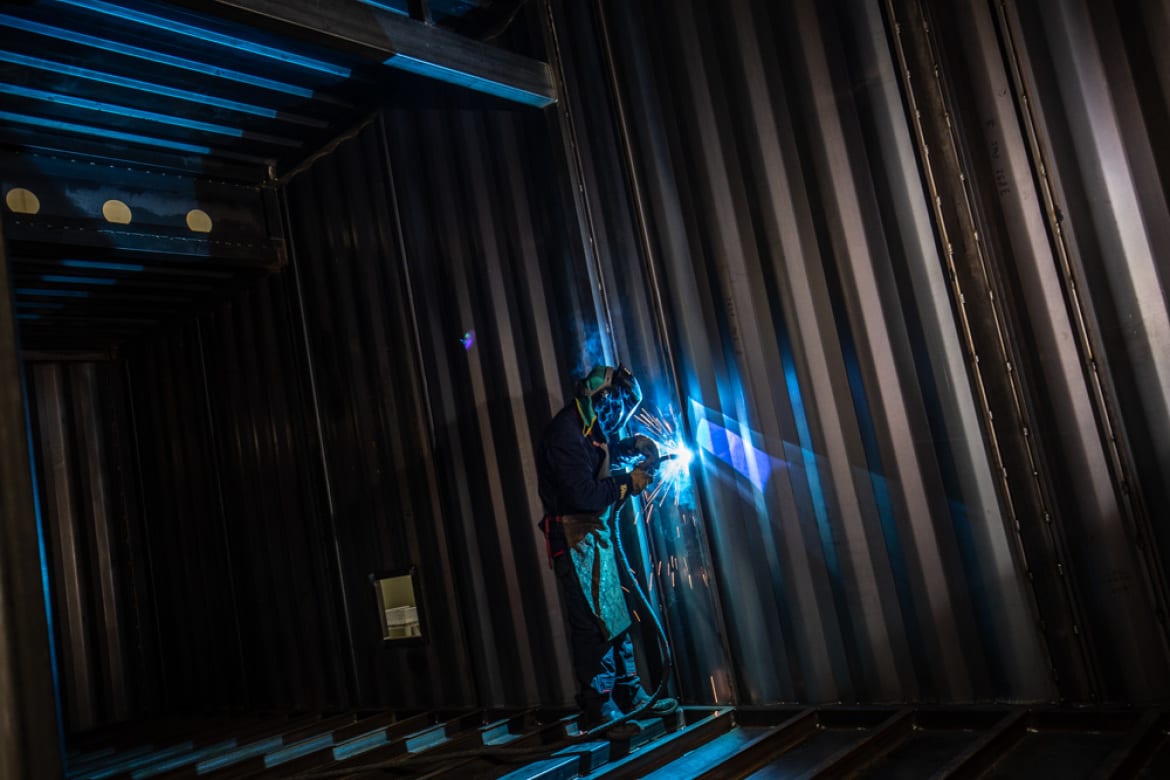
Cutting, welding, blasting and painting large steel structures is energy-intensive work. Sustainability, for a group like ours, is not a slogan: it is a set of concrete decisions about where the energy comes from, how processes are run, what leaves the site as waste and how much energy our products need once they are in operation.
2 MW of solar power across our sites
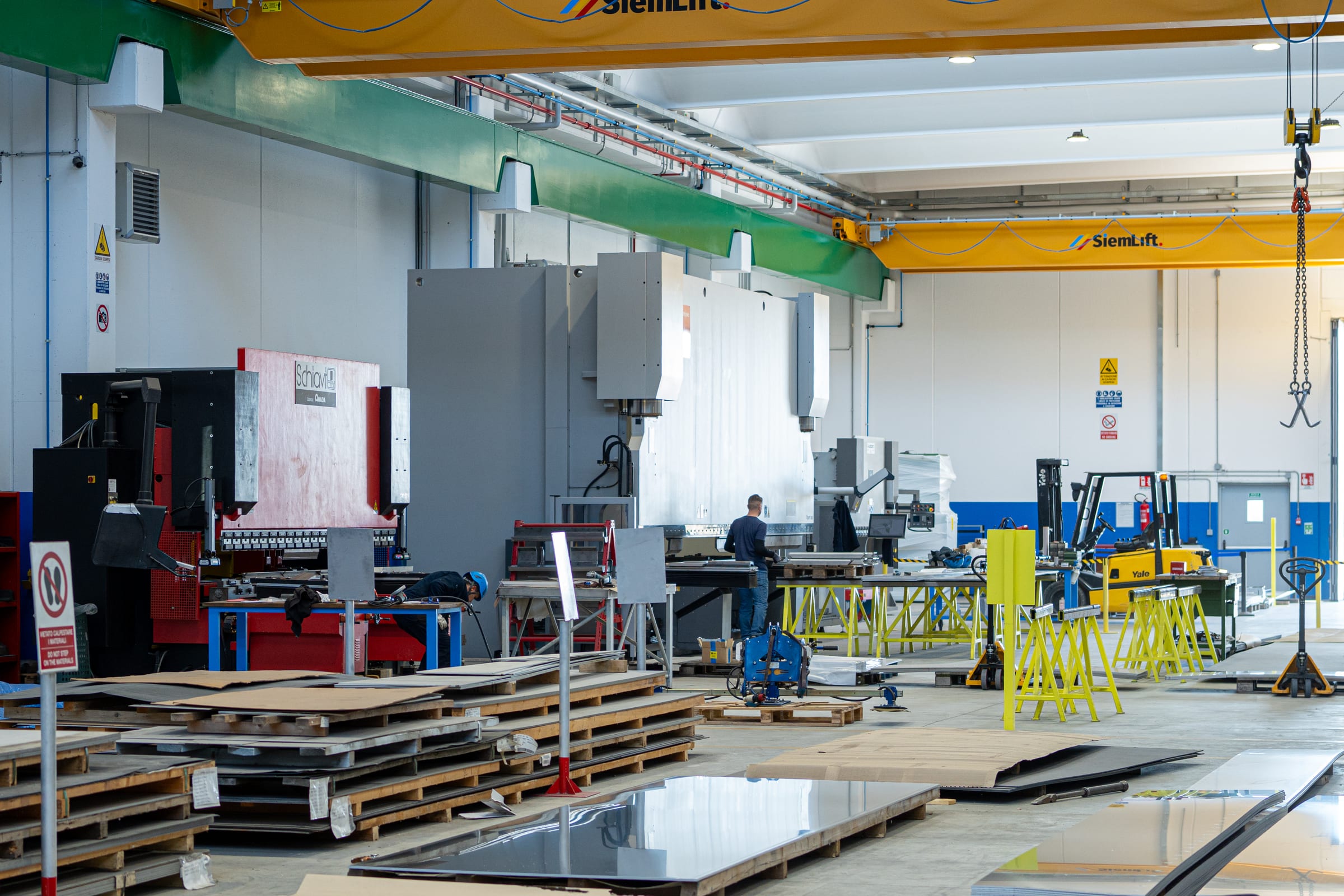
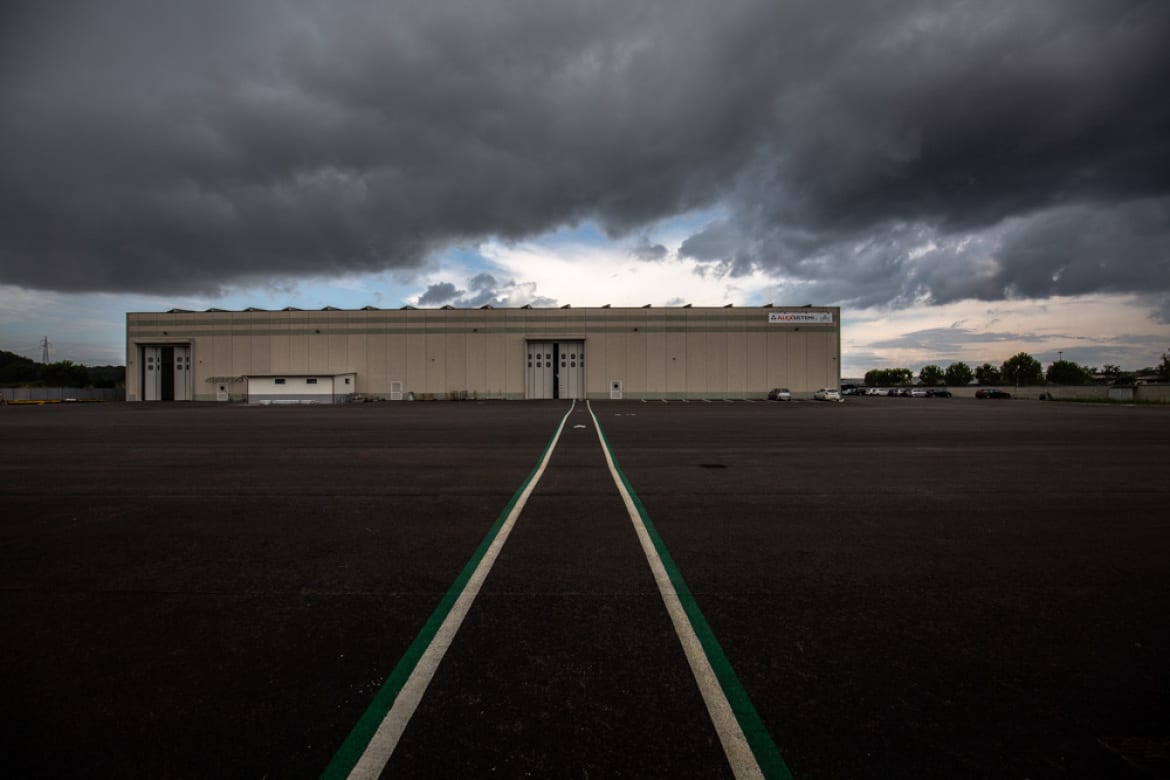
Albizzati Group has installed 2 MW of solar panels on its production sites to produce clean energy and reduce CO₂ emissions, supporting a lower-impact production model. On facilities that run laser cutting machines, press brakes up to 800 tonnes, welding stations, extraction systems and climatic chambers, self-generated electricity directly reduces the carbon footprint of every module we build.
Energy-efficient processes
Energy-efficient processes are implemented across all production sites, optimising consumption while improving performance. The clearest example is the new surface treatment department in Magenta, operational since 2025 and featured in Corrosion Protection n. 14 (April 2026, ipcm): shot blasting, coating, pickling and drying run in dedicated environments with dust extraction, aerosol filtration, fume and vapour extraction and controlled heated-air drying, all under Industry 4.0 monitoring of environmental and operational parameters. Separating machining from surface treatment and managing emissions at source protects operators, meets environmental regulations and delivers a more consistent coating, which in turn means a longer service life for the product.
Resource optimisation and waste reduction
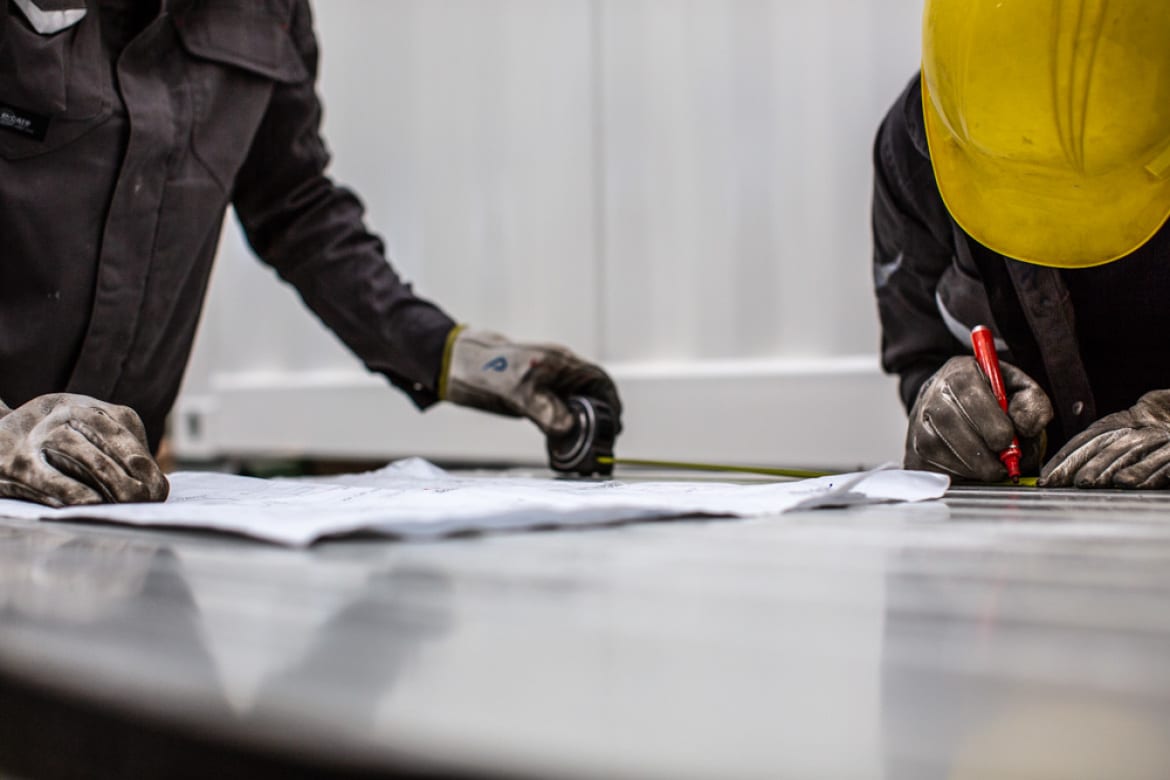
We optimise materials, processes and waste management to use resources more responsibly across all operations. In-house engineering plays a part here: nesting on 12 × 2.5 m laser cutting tables, 3D modelling that validates a structure before construction, and production drawings approved by the client before fabrication all reduce scrap and rework. Continuous investment in facilities, machinery and skills supports safer work, sustainable growth and long-term value for clients.
Products that need less energy to run
The largest environmental effect of an industrial product is often in its operating life, not in its manufacture. Two of our products are designed around that principle.
PCM passive shelters keep electrical equipment within its operating temperature in ambient conditions of up to +55 °C with no HVAC at all: a phase change material absorbs the heat during the day and finned roof pipes release it at night through a natural convective cycle. No cooling unit to power, service or replace, no refrigerant, no water, and a service life beyond 20 years.
The ERPT remote power turbine provides continuous power to remote and unmanned sites with very low CO₂ emissions, since the only combustion is the burner of a closed Organic Rankine Cycle, and generates power according to the actual load demand. Designed for more than 30 years of operation with no overhaul and an annual visual inspection as the only maintenance, it avoids the repeated site visits, replacements and fuel deliveries that remote generation usually requires.
Fewer movements, less rework
Our 100% in-house production cycle also has an environmental dimension. A module that is engineered, fabricated, treated, integrated and tested within the Group does not travel between subcontractors between phases, and arrives on site ready for connection, reducing field work, temporary installations and the corrections that fragmented supply chains generate. Oversized modules leave from the Guasticce yard directly onto the vessel at the port of Livorno.
Made with respect for our planet and people
Sustainability and innovation drive our strategy, ensuring responsible and future-oriented manufacturing. We prefer to report what is installed and measurable, 2 MW of solar capacity, controlled emissions in surface treatments, products that run without active cooling or with minimal fuel, rather than targets. Contact us to learn more about how our sites and products are designed to reduce their impact.